Showing posts with label Sukkot. Show all posts

Sunday, September 27, 2015

Colorful decorations for the sukkah


Tonight the happy Jewish holiday of Sukkot begins (or as Christians call it, the Feast of Tabernacles).


At the shuk (open market) in Beersheba people were busy buying colorful decorations to hang in their sukkah ("booth").
.
See more about the festival in my earlier posts.
Especially interesting are the photos (here and here)  of Jerusalem's huge annual Shuk Arba'at Haminim, the market where very religious Jews carefully select the four species, etrog, lulav (palm fronds), and myrtle and willow branches.
.
For some serious and surprising thoughts about Sukkot and about life, read this by my favorite rabbi in Jerusalem, Rabbi Dr. Nathan Lopes Cardozo:
 http://www.cardozoacademy.info/thoughts-to-ponder/sukkot-joy-in-insecurity/ 
.
Chag sameach -- happy Sukkot!
.

Thursday, October 9, 2014

"No man shall appear before the Lord empty-handed" on Sukkot

.

While walking through the Jewish Quarter in the Old City,  I had to smile at this man.
I asked him if it was a heavy burden, carrying the Temple into Jerusalem.
He gave a kind smile and said no.

He agreed to a photo and was about to set the model on a bench so I could snap a picture.
I said "No, no, wait!  The best part is how you carry it!"
.
Today and all week we celebrate Sukkot.
Sukkot is one of the three festivals that were celebrated (until the destruction of the Second Temple in 70 CE) with mass pilgrimage to the Temple in Jerusalem and are therefore known as the “pilgrimage festivals.” (See more here.)

 Deuteronomy 16 instructs us about the pilgrimage up to Jerusalem and the Temple:

13 “You shall keep the feast of booths seven days, when you make your ingathering from your threshing floor and your wine press; 14 you shall rejoice in your feast, you and your son and your daughter, your manservant and your maidservant, the Levite, the sojourner, the fatherless, and the widow who are within your towns. 15 For seven days you shall keep the feast to the Lord your God at the place which the Lord will choose; because the Lord your God will bless you in all your produce and in all the work of your hands, so that you will be altogether joyful.
16 “Three times a year all your males shall appear before the Lord your God at the place which he will choose: at the feast of unleavened bread, at the feast of weeks, and at the feast of booths.  
They shall not appear before the Lord empty-handed; 17 every man shall give as he is able, according to the blessing of the Lord your God which he has given you.
.
(Linking to Whimsical Windows, Delirious Doors.)

Monday, September 16, 2013

Palms for the succah

.

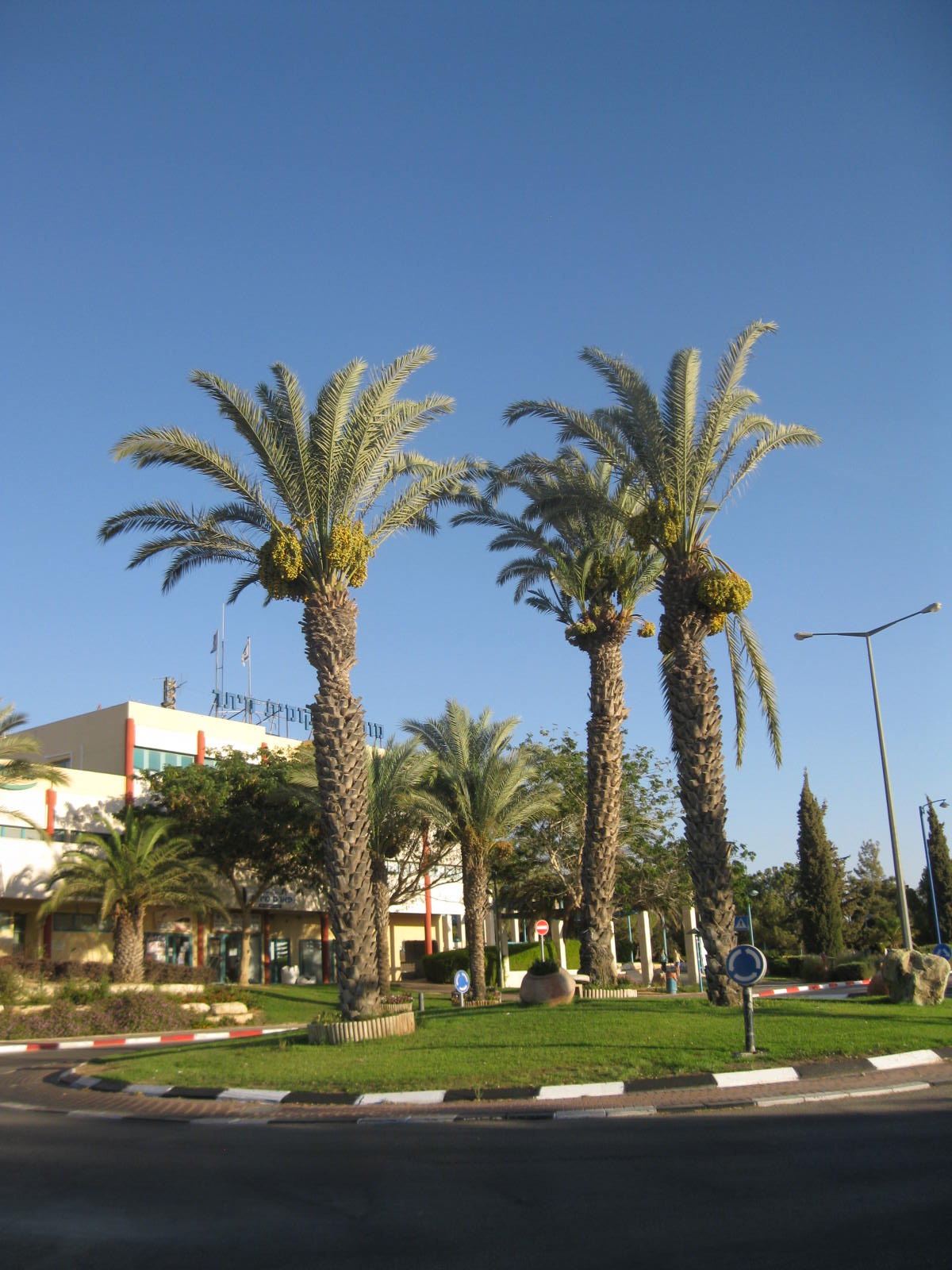
The dates are not yet fully grown but they look heavy and golden in the late afternoon sun.
(Even prettier if you click and enlarge them 2x.)


My new home of Meitar has many many date palm trees.
Short ones and tall ones.


The Meitar Regional Council  (seen in this photo) has been busy planting even more of the impressive  palm trees  to beautify the town (especially now before the October local elections). 
The Sukkot holiday starts Wednesday so the Council has made palm fronds available at a central distribution point.
The branches make good "roofing"  when building  our temporary sukkah booths.
.

Tuesday, October 2, 2012

Sukkot in stamps and glass

.

Shalom!  We are in the happy week of  Sukkot.
Here is a new Israeli stamp for the holiday.
The man in the tallit is holding the four species, including the yellow etrog.


In the big Sukkot stained glass window at the Renanim Synagogue in Hechal Shlomo you can see the etrog on top in its fancy protective container.
Below is the sukkah, in which Jews are supposed to "dwell" (or at least eat) for the whole week.
It's even prettier when you enlarge the photo. 
.
Chag sameach, happy holiday!
.
.

Saturday, September 29, 2012

A moveable feast, oil on wood

 .

Sukkot ("the Feast of Tabernacles") begins Sunday evening.
Here is a sukkah very different from the one I showed you yesterday.
It is so unique, in fact, that it is a museum piece, on display inside the Israel Museum


Here is the story the museum gives:

In the 19th century, Naftali and Zili Deller commissioned a local painter to paint [in oil paint]  the walls of their sukkah.
Their son Abraham Deller and his wife Sofie erected the sukkah in the courtyard of their home in Germany every year until the Nazis came to power. In 1937 the sukkah was smuggled out of Germany and delivered to the Bezalel Museum in Jerusalem.

The central wall features a painting of Jerusalem with the Western Wall at its hub. This painting was copied from a lithograph by 19th-century Jerusalem artist Yehosef Schwartz.
 The other walls contain pictures of the village of Fischach and people from that period: on the right is Zili Deller waiting at the entrance to her home; on the back wall is the local baron, the patron of the village Jews, setting out to hunt.
 Painted within small frames in the background of the central and right-hand walls are depictions of Jewish holidays copied from prayer books printed in Sulzbach, Germany, in 1826.

Quite a history, eh?
You can click the photos to enlarge and study the details.
.

Friday, September 28, 2012

A sukkah at the tram terminal!

 .
Look!
CityPass, the consortium that (tries to) run the new Jerusalem light rail, just gave us somewhere new  to sit at their  Mt. Herzl terminal!
No . . . not more shaded benches at the station;  that would be seen as pampering us, giving ALL of us relief from the 34 C heat.
No . . . not more seats on the tram; they wouldn't want ALL of  us to get used to having a place to sit  (let alone enough room to stand) in the packed trams.


 No . . . it is a SUKKAH they gave us, a temporary booth in which to sit and preferably eat  during the week-long holiday of Sukkot!

The soft walls say "To all the light rail passengers and to all the House of Israel--happy holidays and happy travels."

Inside a sign says it was generously donated by  Sukkot Yerushalaim, the sukkah producers, who claim it is not only kosher, not only kosher lemehadrin, but rather KOSHER LEMEHADRIN MIN HAMEHADRIN.
That's like super-duper kosher!


 Printed on the sides are paintings of Jerusalem.
The one above, at the Western Wall, is the only modern one.
(But notice how the Muslim Dome of the Rock is somehow missing. hmm...)


Throngs of pilgrims would come up to Jerusalem for Sukkot  in biblical times.
Here they are walking toward the Jaffa Gate.


 Here pilgrims are walking toward the Mercy Gate, from the east.
The picture quotes Psalm 122, "Our feet are standing at your gates, O Jerusalem." 


 The Temple is near as they converge from the south.


So many priests, some with trumpets, some tending to the sacrifices!

You might enjoy enlarging this photo to get an idea of how the Temple courtyard might have looked. (Click a second time on the photo that opens up.)


And after you have fulfilled the mitsvah of eating in the sukkah you can sing Birkat Hamazon, the blessing after the meal.
A kosher "roof" covering of a sukkah must let us see the stars at night, hence these "drops of sunlight" falling through the top and onto the walls.

Actually, this could be a good picture for Shadow Shot Sunday meme. 
.
These verses from Deuteronomy 16 explain the three great pilgrimage festivals, when Jews from all over the world would make the journey to Jerusalem and walk up to the Temple Mount:

 "Safeguard the month of standing grain so that you will be able to keep the Passover to God your Lord, since it was in the month of standing grain that God your Lord brought you out of Egypt at night...Then count seven weeks for yourself. From the time that you first put the sickle to the standing grain, you must count seven weeks. You shall then celebrate the festival of Shavuot to God your Lord, presenting a hand-delivered offering according to the extent of the blessing that God your Lord has granted you...When you bring in the products of your threshing floor and wine vat, you shall celebrate the festival of Sukkot for seven days...Three times each year, all your males shall thus be seen in the presence of God your Lord in the place that He will choose: on the festival of matzahs, on the festival of Shavuot, and on the festival of Sukkot...
You shall not appear before God empty-handed."

.
Friday, October 21, 2011

The bounty of our land inside the sukkah

.
On Monday morning some 10,000 people accepted the once-a-year invitation to see the President's Residence, the sukkah, and President Peres himself.
(My previous reports are here.)
.
The sukkah was so beautiful!
The Ministry of Agriculture and Rural Development designed the natural decorations.
.
You might want to enlarge these photos to see the artistic details.


A pomegrante "tree."

"String beans" takes on a new meaning!

Vegetables, fruits, and flowers were grouped according to color: orange, green, white, purple, red.

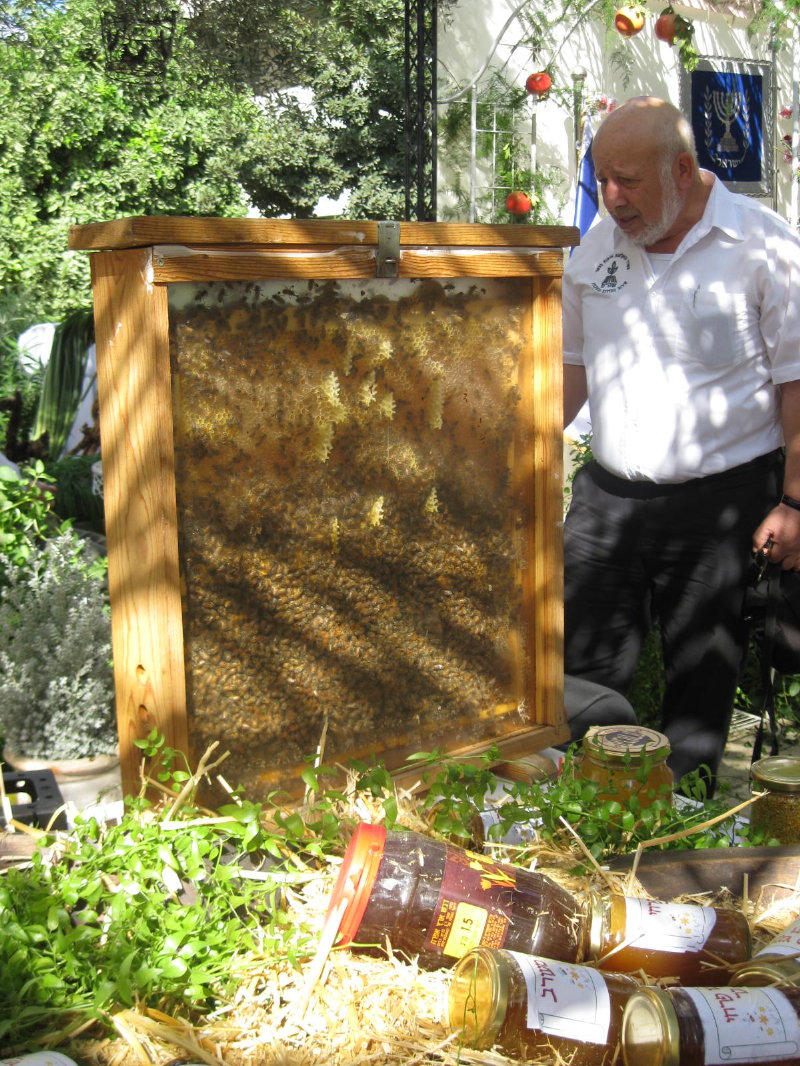
Busy bees were making honeycomb.

Honey in an important symbolic food at the start of the Jewish new year.
We dip apple slices in honey and say the blessing to ask for "a sweet new year."
.

Monday, October 17, 2011

Our President opens his doors to the people

.
Today I accepted President Shimon Peres' invitation and came to his house, Beit HaNassi.
Well, I together with ten thousand curious Israelis and some tourists.
The official Presidential Residence is open to the people but once a year, for Sukkot.

I'll show you more of the festivities soon, but first let me post some presidential doors for the Monday Doorways meme before Monday is over.

And for Our World Tuesday too.

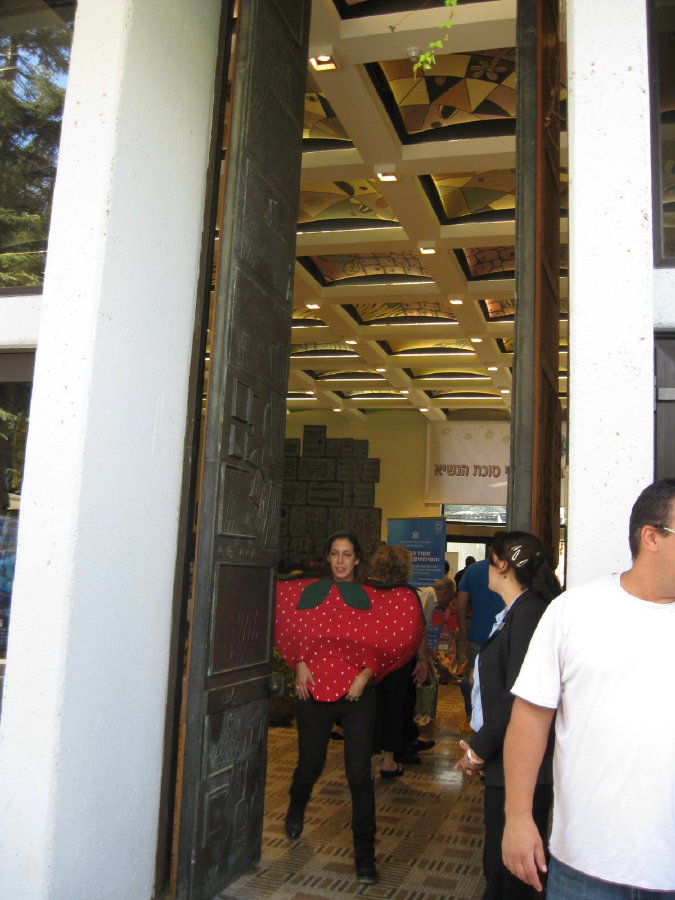
I was trying to snap the tall bronze doors when a strawberry woman suddenly walked through.
(Many of the exhibits today were about Israeli agriculture and science.)
.
The guidebook calls them "Italian-style" doors.
You can see some of the 63 painted squares which decorate the ceiling of the reception hall, which is used for formal ceremonies.


The inside of the tall doors is of wood.

The guards let us peek through the door of a more cozy meeting room where the President talks with his VIP guests.

Not exactly a door but this is the entrance to the beautifully decorated sukkah, which is what our festival of Sukkot is all about.
The Hebrew above is from the Bible. God is saying "Then I will give you your rains in their season, and the land shall yield its produce, and the trees of the field shall yield their fruit."

Let it be so.

.

Wednesday, October 12, 2011

Two very different sukkot

.
Happy Sukkot!
Tonight starts the week-long festival when we are supposed to eat and dwell in sukkot, temporary "booths" or "tabernacles."
.
This purple one is the most unusual sukkah I saw today in my little walk around the Jerusalem neighborhood Romema.
It's in the passageway that leads to the Central Bus Station.
The pattern on the fabric may have to do with the fact that the sukkah probably was put up by the owners of the shop there that sells India clothes from Goa.


The more typical sukkah for the more orthodox Jews has wooden sides with some palm branches on top.
The black cat was sleeping in the warm rays of the sun.
The cat's car looks muddy because we had rain last night, the second rain of the season.
.
Actually this is the only week of the rainy season that we don't want rain, as it would damage the pretty decorations in the sukkah.


The etrog is part of the "four species" (palm frond, myrtle and willow branches, and etrog) needed for the Sukkot ritual blessing.

At Judaism 101 you can learn everything you every wanted to know about this strange fruit, the etrog. And about Sukkot too.

This year I didn't make it to the special four species market, but you can see my photos from previous years among the Sukkot posts.
.
Moadim lesimcha--happy holiday!

.

Wednesday, September 29, 2010

One more day

.

Today is the Hoshanah Raba holiday.
These men are praying at the Western Wall with lulav and etrog.
.
The one in the foreground is wearing a fur streimel, the traditional hat worn by certain branches of haredim (ultra-Orthodox Jews) on festive occasions.
.
In a few hours the joyous holiday of Simchat Torah begins; and tomorrow night the week of Sukkot will come to an end.
I have not gone into Jerusalem and the Old City all week, wanting to avoid the press of the multitudes and the intense heat of this never-ending summer. I have not even been inside a sukkah.
.
But I can offer you holiday posts from last year and the year before, in case you missed some.

Beating the willow on Hoshanah Rabah at the Kotel
About Simchat Torah and the Chagall windows synagogue
My first time inside the men's world of the four species market
The yearly shuk of the four species
Myrtle, willow, and palm branches at the shuk arba'at haminim

Selecting the perfect lulav
Dwelling in a temporary hut
Super-sukkah at the Western Wall Plaza
Chabad sukkah-mobiles in Rome and New York, and selecting the right lulav
About Simchat Torah, grandson Dean with a baby Torah scroll, and Seth Brown's new Torah translation in verse
.
Shalom and chag sa-me-ach, happy holiday!
.

Wednesday, September 22, 2010

Red magen David

.
I knew the pomegranate has special symbolic value for the Jewish new year Rosh Hashana.
I knew the fruit tastes good and is good for you.

But I never realized until looking at this photo that the pomegranate wears a star of David!
.
Sukkot starts tonight. Chag sameach, happy holiday!
.

Tuesday, September 21, 2010

Speak softly

.
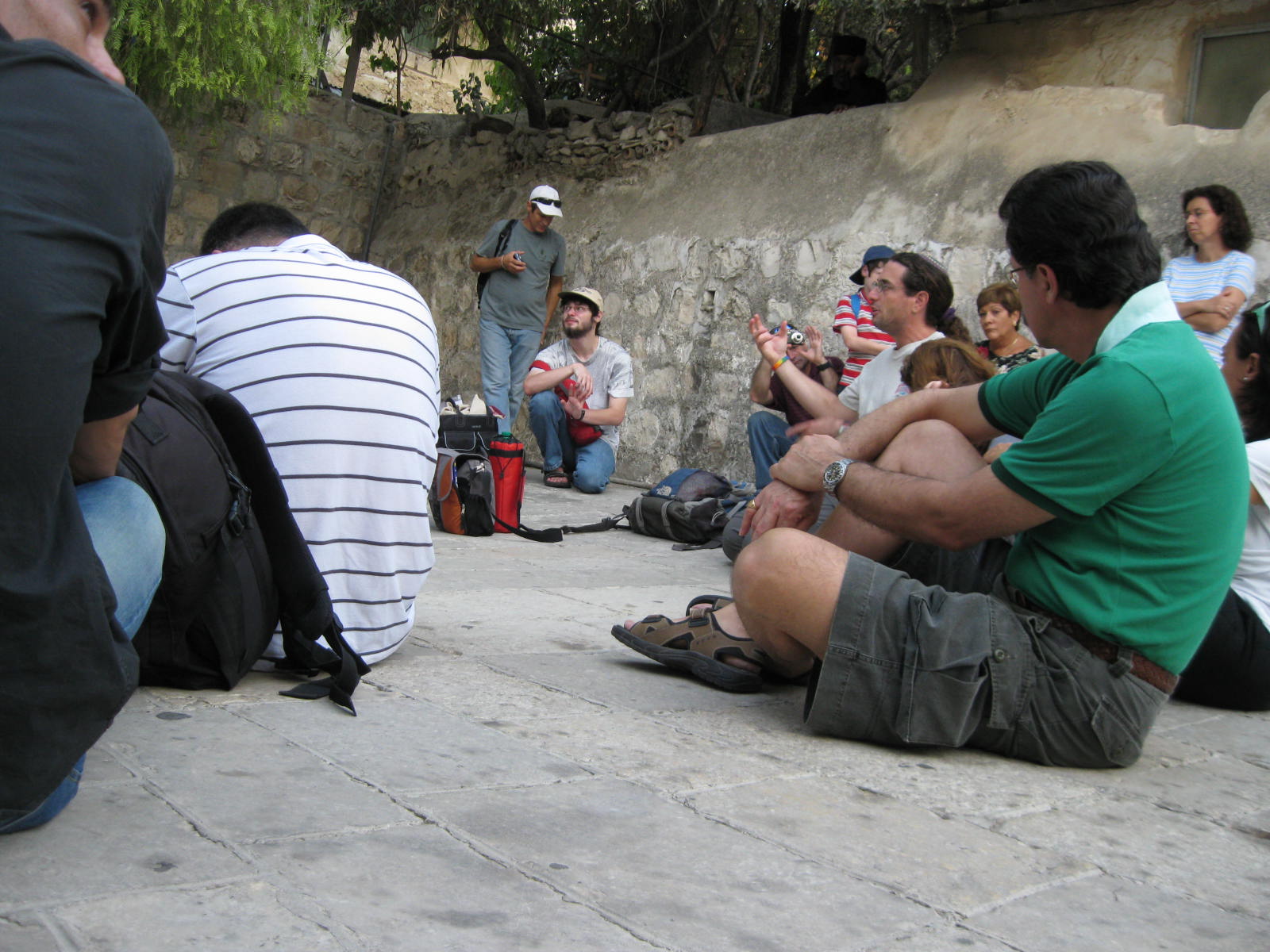
I took a tour myself yesterday and for That's My World I'll pass it on to you.
.
The subject of the 3-hour tour was "The People of Jerusalem's Old City."
It was sponsored by the Interfaith Encounter Association.
Our guide, shown in the photo above, was educator Jared Goldfarb.
.
A large group showed up for the English-speaking tour.
From Jaffa Gate we walked to the Armenian Quarter, then to the Jewish Quarter (pictured above).
The wooden hut you see is a sukkah for the coming holiday of Sukkot.

After hearing Jared's explanation of the situation of Muslims in the Muslim Quarter, we entered the Christian Quarter.
We ended up on the roof of the Holy Sepulchre for the final presentation, about the Christian minority.
Jared (here with hand in the air) lowered his teaching voice out of respect for the Ethiopian monks who live in tiny cells on the roof.
.
See the dark figure above looking down on us?
.
The monk seemed amused and curious.
I suspect he sees many many tour groups there every day but not many that sit on the ground and speak softly.
.
Happy International Day of Peace!
.

Tuesday, October 6, 2009

Lulav

.
All week we are celebrating the Jewish festival of Sukkot (instructions begin in Leviticus 23:39).
Let us combine it with L-Day at ABC Wednesday.

Lulav! This Hebrew word לולב is the name for a ripe, green, closed frond from a date palm tree.
The man is meticulously examining the lulavim, deciding which one meets his standards and his budget.

Limes? Lemons?
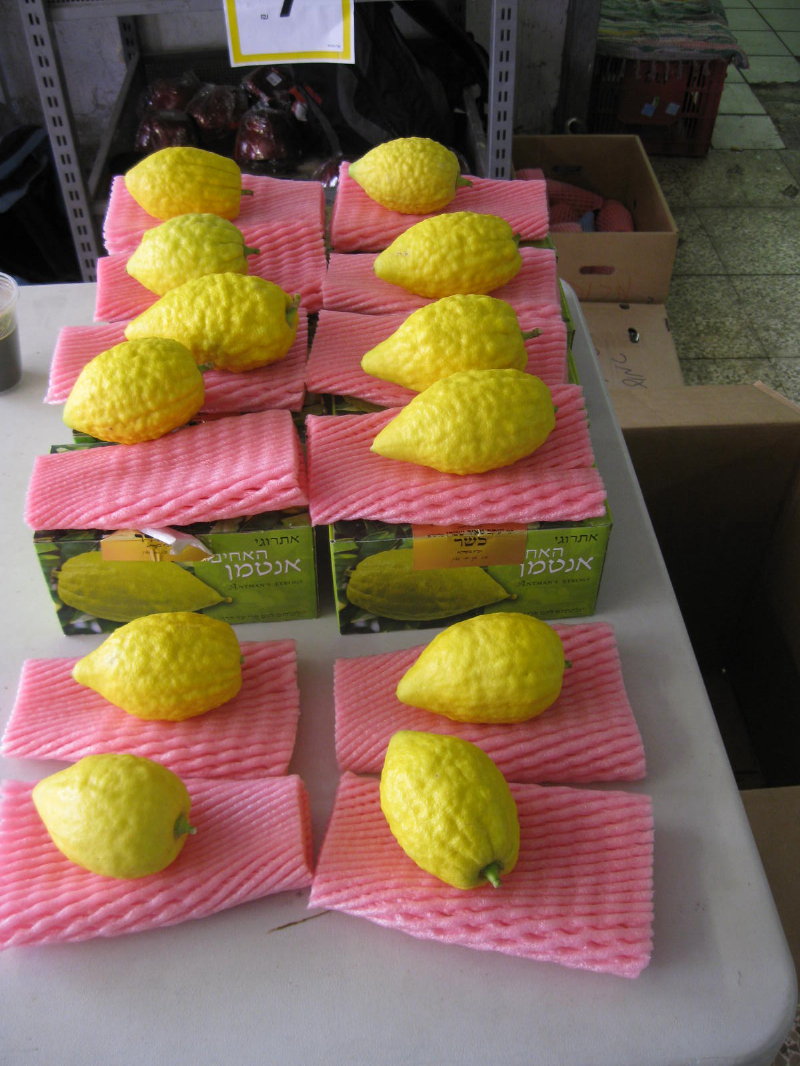
No! These are etrogim. The etrog is the fruit of the citron tree.
Together with myrtle branches and willow branches, the lulav and the etrog make up the "four species" that are required for Sukkot.
You will enjoy reading about their rich symbolism.
While holding the plants together with both hands, you say the blessing and shake them above you, downward, in front of you, in back, and two both sides--showing that God is everywhere.
The leaves of the lulav make a nice snapping sound.
.
But this should be done inside a sukkah, the temporary booth or hut we put up to "dwell in" during the week of Sukkot.
And, in the Diaspora at least, if you don't have or can't find a sukkah, Chabad will make sure you see their Sukkah Mobile at various obvious places.
The Chabadniks will make sure Jews perform the mitsva of eating in the sukkah and waving the lulav.

Look! Another Sukkah Mobile parked outside the Coliseum in Rome!
.
The last two photos are borrowed from Chabad, with thanks. Thanks for all they do.
.

Thursday, October 1, 2009

The four species market for Sukkot

.
(all photos are clickable)
A purple tent under a blue Jerusalem sky.
The sky is for SkyWatch Friday. The tent is for the yearly Shuk Arba'at Haminim.

Arba'at haminim are the four species of plants needed in order to make the blessings for the holiday of Sukkot, starting Friday at sunset.
For the whole next week Jews are supposed to dwell in the sukkah (or at least to eat our meals there). The temporary "booths" are to remind us of the wandering in the wilderness for 40 years, way back when Moses was leading the people out of Egypt.

The market for etrog, lulav (palm fronds), and myrtle and willow branches is very much a man's world. The religious men understand what the Jewish halacha law requires for each of the four species in order to make it perfect.

They were concentrating so hard on examining each leaf that they seemed oblivious to me, the only female, wearing the frowned-upon [for women] jeans and T shirt.
I shot from the hip. It was not an in-your-face aiming and shooting.
I love to watch Orthodox Judaism in action.
.
There is information about Sukkot, the sukkah, and the special market in my posts from last Sukkot here, here, and here.
.
Let's pray the rain will hold off for another week. No one wants their beautifully decorated sukkah getting all wet.
.

Wednesday, October 22, 2008

This too shall pass

Having time before the next bus back to my village, I went exploring today in the Jerusalem neighborhood of Beit HaKerem.
The morning after! Just yesterday all these palms were the sekhach, the roof cover of sukkahs. Now the holiday of Sukkot is over and the sukkah-booths are being dismantled.
Flowers or birds? Don't they look like colorful crested cranes?
Even stranger than the car itself was its Hebrew lettering. On the left door it says "Gam zeh ya'avor" written from right to left (as is normal in Hebrew) and on the right-hand door the same sentence but written in mirror image and going from left to right.
At home I looked at the website. Baruch Hadaya is a 16th generation Jerusalemite. Wow! He is an artist, a storyteller, a jeweler.
He says that "Gam zeh ya'avor," meaning "This too shall pass," engraved on his rings, is based on a story about King Solomon. You can see or hear the tale here.
Hadaya says, "This story reminds you that when you have a bad day, it will pass. And when you have a good day seize the moment, enjoy it, appreciate it because you should know it would not last forever."

Monday, October 20, 2008

Hoshana Rabba

.
Big day in Jerusalem today! The seventh day of Sukkot is called Hoshana Rabba.
So three friends and I took the early bus to town and got to the Western Wall early, before the tourists woke up. Only the devout worshippers were at the Wall.


Just inside the Old City wall's Dung Gate, the separation started. The sign says "Men's section//Women's section."
This walkway leads to the security checkpoint: your bag is searched and you walk through a metal detector.


We were well protected.  See all the men in uniform? 


Hoshanah Rabbah is also know as "the day of the beating of the arava [willow branches]."
As you see, several men were selling them.


Almost 2,000 years ago the Mishnah (the first part of the Talmud) said, in tractate Sukkah 4:2,
 "How was the mitzvah of aravah fulfilled? There was a place below Jerusalem called Motza. They would go down there and pick branches of willows and would then come and place them alongside the altar with the heads (of the willow branches) bent over the altar. They then sounded the shofar . . . . Each day they would circle the altar once and say, 'Ana Hashem hoshiah na (Please, God, bring us salvation), Ana Hashem hatzlichah na (Please, God, bring us success)' . . . . On that day [Hoshana Rabbah] they circled the altar seven times. When they had finished they would say, "Beauty is yours, O altar, beauty is yours."


And till today, the men still circle the Torah scrolls seven times, holding the Four Species. The man shown above holds the etrog, myrtle, willow, and palm together, near the heart.


The man in the center is doing the shaking of the lulav left, right, forward, backward, up, and down, to show that God is present everywhere.


See the aravah or willows the men have thrown on top of the holy ark where the Torah is? 
Just like the Talmud said to do!


And we heard the call of the shofar!


The male-female divider was thankfully moved a bit more to the left today, to give women more room near the Wall.


The Four Species are often transported in a transparent, flexible plastic carrying case. I think a white stick is included in the set to prevent too much bending. 
These boys were having a sword fight with those sticks.


A little boy was playing at beating a willow on the ground.
Prayers for water and divine blessing throughout the year are very fervently said today.
It is said that during the Festival of Sukkot, the entire world is judged concerning water, fruit, and produce. The seventh day of the Festival, Hoshana Rabbah, is the day on which this judgment is sealed.
At the end of the prayers, in an ancient rite of deep mystical significance, five willows bound together are beaten five times on the ground, symbolically "sweetening" God's judgment.
.
A new weekly bloggers' meme, "That's My World Tuesday," starts today, conceived by the folks who brought you SkyWatch Friday. Have a look at MyWorld to enjoy guided mini-tours.

~~~~~~~~~~~~~~~~~~~~~~~~~~~~~~~~~~~~~~~~~~~~~~~~~~~