

Part of our Sabbath Eve dinner at Elma hotel--challah bread and some of the wine that you saw in the previous post.
The long dinner table is made of shiny recycled metal.


During the course of aging, a wine may slip into a "dumb phase" where its aromas and flavors are very muted. In Bordeaux this phase is called the age ingrat or "difficult age" and is likened to a teenager going through adolescence. The cause or length of time that this "dumb phase" will last is not yet fully understood and seems to vary from bottle to bottle.The Sharon plain near the Mediterranean coast and just south of Haifa, surrounding the towns of Zichron Ya'akov and Binyamina, is Israel's largest grape growing area; and this is where Elma is located.
 Click on the transparent sign to read names of the various vats.
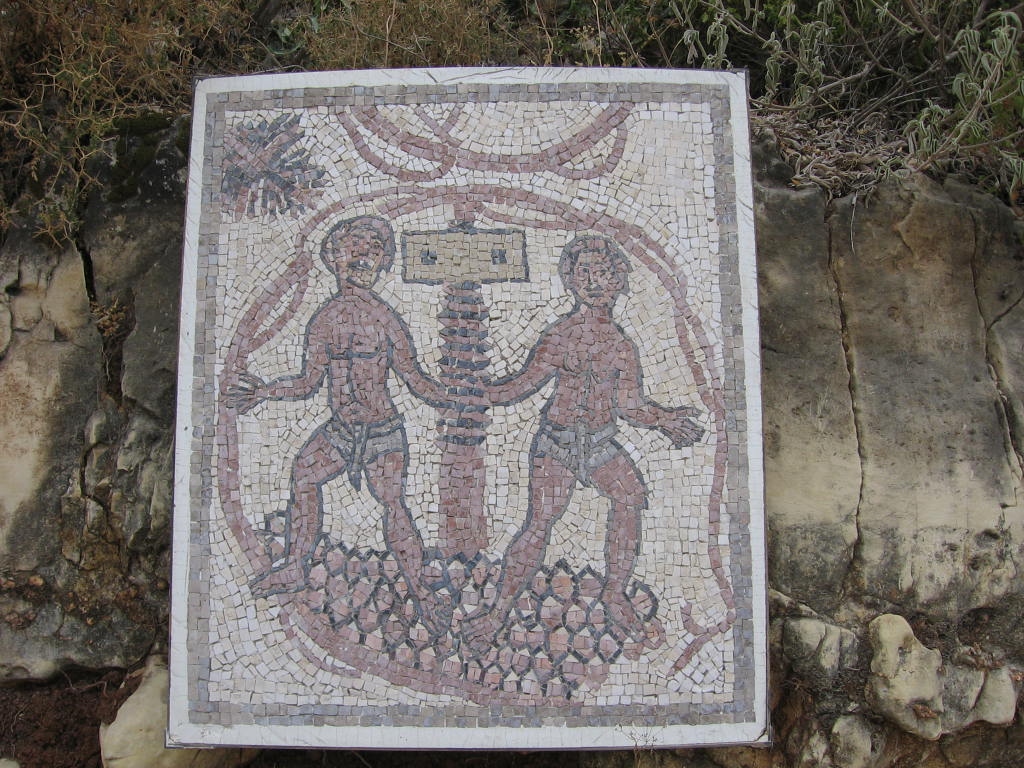 As this mosaic picture shows, the treading floor was a large area, normally covered by mosaics, where the grapes were laid and crushed by the feet of the workers, extracting the juice.
 A small hole in the center of the treading floor was for a secondary crushing of the grapes.
 Juice flowed from the small filtering vat into the collection vats.
 Fermentation took place in the jars and a cool storage area, such as a cave, was used to store the wine.
  During the Roman and Byzantine periods there were hundreds of winepresses in the fields, villages and cities of the Holy Land.
. . . each Roman soldier consumed a liter per day, or 6,000 liters per day for one Legion stationed in the Galilee. The wine has medical advantages - killing bacteria and making the drinking water safer. The wine was often diluted with equal portion of water, and used as their drinking water, keeping the soldiers healthy (and happy). This may have been one of the Roman soldiers advantages in the battlefield. To supply this demand the wine was produced in a short period of a month or so, producing a low alcohol (4%) sour wine.

