Sunday, July 18, 2010

Driving under, looking up

.
Once again, for Louis la Vache's "Sunday Bridges," Jerusalem's Bridge of Strings.
(See more under the label Calatrava.)
.
How did reflections of the tall apartment buildings get onto the UNDERSIDE of the bridge?!
You figure it was a trick of the bus window through which I took the picture?
.
Everyone thinks "Trolls!" when you say "under the bridge," but I think the religious men in this photo look dwarfed by the big bridge.
.

Saturday, July 17, 2010

Pony shadows at the Sea of Galilee

.
Tiberias has a nightly market place near the lake for tourists and locals, with all kinds of things to buy or eat.

Once we even saw pony rides!

The harsh projector-like lights above made strong shadows, good for Shadow Shot Sunday .


The string of ponies is a welcome change from my usual cat or bird for the Camera-Critters meme.

Two Arab boys were lucky to ride when their father (in the dark shirt) shelled out some shekels.
.

Friday, July 16, 2010

Old and new, co-existing

.

For James' Weekend Reflections , here is the new reflected in the old.

The old is about 900 years old, a building from Crusader times that now houses the Tiberias Tourist Information office.

The new is the Leonardo Plaza Hotel next to the Sea of Galilee.

Which architectural style do you like better? I'll take arches any day.
.

Moon dwarfed by pines

.
Hey, how did the moon get so small?
:)

Hundreds of weekly participants are celebrating the 3rd birthday of SkyWatch Friday today!

Bloggers from over 80 countries have been getting to know each other by sharing their skies.

Mazal tov to the meme's founder, Dot. And thanks to those who followed her in leading the way: Tom, Klaus, and team Sandy, Wren, Fishing Guy, and Sylvia.
.

Thursday, July 15, 2010

Capitolo ends, Mass begins

.
Today's 7:30 a.m. Mass at the Church of the Holy Sepulchre was a special one.

The Franciscans had just completed their ten-day Capitolo Custodiale, their Chapter meeting at which important regional decisions were made.
.
(They even wrote a daily blog about it, in Italian and English.)

Benches were taken out of storage and set up in the rotunda.

The Franciscan fathers lined up for their turn to enter the edicule, the little room containing the tomb of Jesus.
I try to imagine how special it was for them to receive Communion in that holiest of Christian holy places.

Raised hands during the words of institution.

The readings from Scripture.
.
In 1342 Pope Clement VI declared the Franciscans the official custodians of the Holy Places in the name of the Catholic Church.
To learn more about how this works in modern Israel, please see http://en.wikipedia.org/wiki/Custodian_of_the_Holy_Land.
.
Custodia di Terra Santa has a website explaining their activities, and even a Facebook page.
.
For more about the church, you can click on my label "Holy Sepulchre."
.

Wednesday, July 14, 2010

Bastille Day at the French Hospital

.
Walking up Sultan Suleiman St. (also now know as Paratroopers Way), I wondered why the hospital was flying a French flag today.
Aha, it must be July 14, Bastille Day, le 14 juillet!
.
Normally the French Hospital St. Louis flys the Vatican flag.
The dedicated nun-nurses and volunteers care for terminally ill patients, whether Christian, Muslim, or Jewish.
.
But for a funny story about this hospice, see the beginning of an article by Aviva Bar-Am.
.

We deliver

.
Sultan Suleiman Street is a main, usually congested, thoroughfare in east Jerusalem just outside the Old City wall; and it is the main street of Arab businesses.

The wide sidewalk between the city wall and Sultan Suleiman at times becomes a loading zone.
Big trucks, which cannot enter the narrow lanes of the Old City, off-load merchandise here.
It is then carried through the closest gate into the Old City.
"Carrying" can mean on a porter's back or head or on a small dolly.
But the normal means of transportation is this cart.
Note the tire on a chain. On a downhill, the driver steps on it and slows down.
.
I still remember my first year in Israel--donkeys were still in use inside the Old City.
No more.
.

Tuesday, July 13, 2010

Zones of listening

.
Zones of holy silence


Blessings to Denise Nesbitt for beginning ABC Wednesday.
And thanks to the ABC Wednesday team--Denise, Roger, Barb, Jay, Gattina, Sylvia, and Troy--
who are now helping with the meme.
It is fun having a letter challenge once a week. And with today's Z Mrs. Nesbitt finishes SIX rounds of the alphabet and starts us anew again next week.
.
Peace be with you.
.

Monday, July 12, 2010

Making a home for archaeology

.
On June 30, quite by accident, I made an exciting archaeology discovery that made me very happy.

While walking over to the Israel Museum, I noticed this helium balloon floating with a camera suspended from it.

The cables tethering the balloon led to this construction site.

I hurried over to investigate and was overjoyed to discover that here will be built the NATIONAL CAMPUS FOR THE ARCHAEOLOGY OF ISRAEL!

The bulldozer in the photo was just beginning to scratch the surface.
So far, this group of huts and containers is all there is, as far as I know.
.
In the background you see the green oval of the Hebrew University stadium.

( This and the following two photos are courtesy of the image gallery at
But here is what it WILL look like maybe even next year already!

This is so cool!
The roof here in the scale model is meant to look like the black canopy netting under which we diggers excavate in the hot season.
But this one has a hole in the middle which will collect rain water and funnel in down into a pool, like a waterfall!
.
God bless architect Moshe Safdie and his great ideas!
Read his Design Concept for the campus here. You'll love it.
.
Also inspiring are the The Vision and the Mission Statement for the Jay and Jeanie Schottenstein National Campus for the Archaeology of Israel.
Here is part of The Vision:

"By creating the National Campus, nearly one million objects in the Archaeological National Collections [including 15,000 fragments of Dead Sea Scrolls], the National Archaeological Library and Archives, the National Archaeological Conservation and Restoration Laboratories, the housing facilities, the archaeological education centers and the headquarters of the Israel Antiquities Authority will be brought to a safe and permanent home, in Jerusalem's Museum Hill. . . . "
.
At present, all these treasures and resources and people are scattered all over Israel and mostly can't be seen. It is time they got a place all their own.
.
The treasures collectively represent the cultural heritage of the Land of Israel, and in a way the archaeological work conducted in our country is also universal in that it preserves the heritage of all mankind.
.
.
This good news is my contribution to That's My World Tuesday.
.

Sunday, July 11, 2010

Look Ma, no hands!

.
The newsmen were focusing on Jerusalem Mayor Barkat at the recent rededication of the Old City's Flower Gate (aka Herod's Gate).

But I found it more interesting to watch the photographers instead.

This was new to me.
A kind of video camera stabilizer, I suppose?
Can some of you tell me what it is called or more about it?
.

A bridge between cultures

.
Uh-oh, I'm running out of Israeli bridges for Louis la Vache's "Sunday Bridges."

How about a bridge between ancient cultures?

This 3D map has been touched by so many pointing guides at the Tower of David Museum that you can hardly make out the names.


"Situated in the Fertile Crescent, stretching along the Mediterranean Coast, the ancient Land of Israel (Canaan) served as a vital corridor between continents, a cultural bridge and a buffer between the two mighty civilizations on its borders--Egypt and the kingdoms of Mesopotamia. "
. . .

Saturday, July 10, 2010

Fun in the sun

.
Israeli blogger Robin of Around the Island invites us all to share scenes of summer tonight and every Saturday night.
.
These young religious girls were having the time of their life singing and splashing in Jerusalem's Lions Fountain!

Even "swimming" in the shallow water!
It was a super-hot day in the city, and I was a bit envious.
The lion is the symbol of Jerusalem. This fountain was a gift from German Chancellor Helmut Kohl to Jerusalem.
The dove of peace perches atop the Tree of Life. In this picture a real bird was drinking water from the statue-bird's mouth.
Sprouts on the tree symbolize the branching of three Abrahamic faiths from a single root. And indeed, you often see Arab kids splashing in the water next to their Jewish "cousins."
.

Shaded by palm thatch

.
These fun shadows were shot especially for Hey Harriet's "Shadow Shot Sunday."

Date palm trees grow in big plantations along the shore of the Dead Sea.
So it is only natural that the En Gedi Nature Reserve should use their fronds as thatching.
The huge umbrellas cover the ticket booth and the picnic area.
(No eating is allowed inside the oasis in Wadi David. )
.
For better views of the roof see here and here.
So it was the bright sun coming through these roofs that made the sharp shadows.
.

A flying peacock!

.
When my American friends were visiting, we rented a car and circled the Sea of Galilee.

Here you can see the blue of the sea behind the Monastery of the Twelve Apostles (popularly know as the Greek Orthodox Capernaum).
.
But there is something even better than this photo's donkey that I want to show you for Camera-Critters Sunday.

As we walked in the monastery grounds, I heard the shrill cry of a peacock.
It looked like he was getting ready to jump off the roof so I quickly raised the camera!

Ta-daa! Have you ever seen a peacock flying?!?
He was gliding right toward me!

The monks seem to like birds. There was an aviary.
And many peacocks and peahens were roaming and hunting for food all over the lush gardens.

The birds must see thousands of pilgrims and tourists every week, so they are people-friendly.
.

Friday, July 9, 2010

Visions of a new monastery

.
People outside in the courtyard are reflected in the glass case housing a model of the new Benedictine monastery now being built at Tabgha, on the shore of the Sea of Galilee.
.
Specially taken for James and the friends at "Weekend Reflections."
Please click on the photo to read the monks' message and about how cracks are forming.

The new monastery is being built just south of the Church of the Multiplication of Loaves and Fishes.
.
I wish the Brothers all the best and enough new vocations to fill the building.
.

Thursday, July 8, 2010

White magic, angels and demons

.
White magic beneath a blue sky . . . for Sky Watch Friday.

Believe it or not, the first-of-its-kind exhibition "Angels & Demons" is about Jewish magic.
The Bible prohibited Jews from dabbling in black magic, but white magic (what I would call superstitions) was not so bad.

Don't ask, 'cause we didn't go in to see it.
.
But we did have fun outside the museum photographing a visiting Franciscan monk!
Fr. Eduardo, if you see this post, please leave a comment so I can find your blog on Blogger.
Someday soon I will have to take a whole day, alone, and slowly go through the Bible Lands Museum Jerusalem.
Opened in 1992, it bills itself as "the only museum in the world dedicated to the history of the Bible and the Ancient Near East."
.
This Ministry of Tourism press release shows some fascinating examples of the objects that many believed, and some still believe, to be magical.
.

Wednesday, July 7, 2010

Jerusalem's Gypsies

.
The most interesting new thing I learned at the June 28 rededication of Herod's Gate was this:

The man delivering a speech in this photo is gypsy mukhtar of the Old City, Abed-Alhakim Mohammed Deeb Salim, whose community resides in the Muslim Quarter’s Bab al-Hutta section near Herod’s Gate.

Who knew?? Not me!
.
Apparently somewhere between 600 and 1000 gypsies live inside the walls of the Old City.
Larger populations live in Judea, Samaria, Gaza, and the West Bank.
.
Some think that the Domari (the name for Middle Eastern gypsies) migrated from India over a thousand years ago, while some say from the Arabian Peninsula.
.
Here they have assimilated to the extent that they are now Arabic-speaking Muslims.
Only the elderly still remember the Domari language.


This present mukhtar (being interviewed above) is the grandson of the mukhtar who led the community in the early 20th century when they were still nomadic, traveling between Jerusalem and towns in the West Bank, holding occupations such as blacksmiths, silversmiths, horse dealers and trainers, singers and street musicians, dancers, and animal healers, belt makers and tattoo artists.
But also, it is said, some excelled as pickpockets and beggars.
.
The Dom then settled in a tent encampment in Jerusalem, just north of Damascus Gate.
In the early 1940s the British military administration suspected them of hiding weapons used in the Palestinian resistance against British rule, and their encampment was dissolved.
The gypsies began to find rented accommodations within the Old City, turned to paid occupations, and became sedentary.
.
Many of the women and children were beggars until 1967. Those who did not flee during the Six Day War soon began receiving some Israeli social benefits when the Old City came under our administration.
.
However, there is still poverty. Apparently because they are poor and are "different," the Dom kids feel discrimination and humiliation (e.g. called to the front of the classroom to be called "nawar," or dirty Gypsy, in front of all the students) in the Arab schools and many drop out. The illiteracy rate within the community is almost 40%!
.
The Domari Society of Gypsies in Jerusalem was founded in 1999 and strives to help the community and to keep their handicrafts, customs, food, and language alive.
They have a wonderful website. Please pay them a visit.
.
Haaretz has a good article about the community called "Linguistic embers of a colorful past."
And an American student who spent several months with the Domari Society blogs about them here and here.
.
UPDATE Oct. 27, 2013:  A good new Ynet article about the Jerusalem Gypsies today.
.
Tuesday, July 6, 2010

Yearning for Yarmouth

. For ABC Wednesday Y-Day, let's see some old pics from Yarmouth! . Tel Yarmouth is an Early Bronze Age site--that means from more that 4,000 years ago. The tel is in central Israel, not far from Beit Shemesh.
This photo is taken from the Yarmouth Facebook group's album.
. Sometimes, when they needed a photo of an important find in situ, right away, we volunteers (and some staff) would line up in a human wall and "make shade" over the object.

 
The best time for the expedition's photographer, though, would be right before sunrise.

Here the volunteers, most of them from France, wait for the Bedouin paid workers to put up the shade netting.
In my first season with the Yarmouth group, in 1993, we slept in big tents in the forest next to Emmaus, near Latrun.
In my 2006 and 2007 seasons, we were housed in spartan kibbutz housing.
Everything I needed was on, under, above, or next to my bunk bed.
Sleeping in the quiet forest was more fun. The bells of the Trappist monks at Latrun monastery were my alarm clock for 4:00 a.m. rising.
.
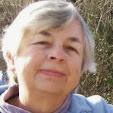
The Yarmouth tradition was to have a nice glass of arak with ice after a hot day's work at the dig.
It was my first--and last--time to drink arak.
You never know what you're going to learn at a dig. :) It tastes quite good, actually.
.
UPDATE 2020:  See all about Tel Yarmouth at Biblewalks.  
.