.
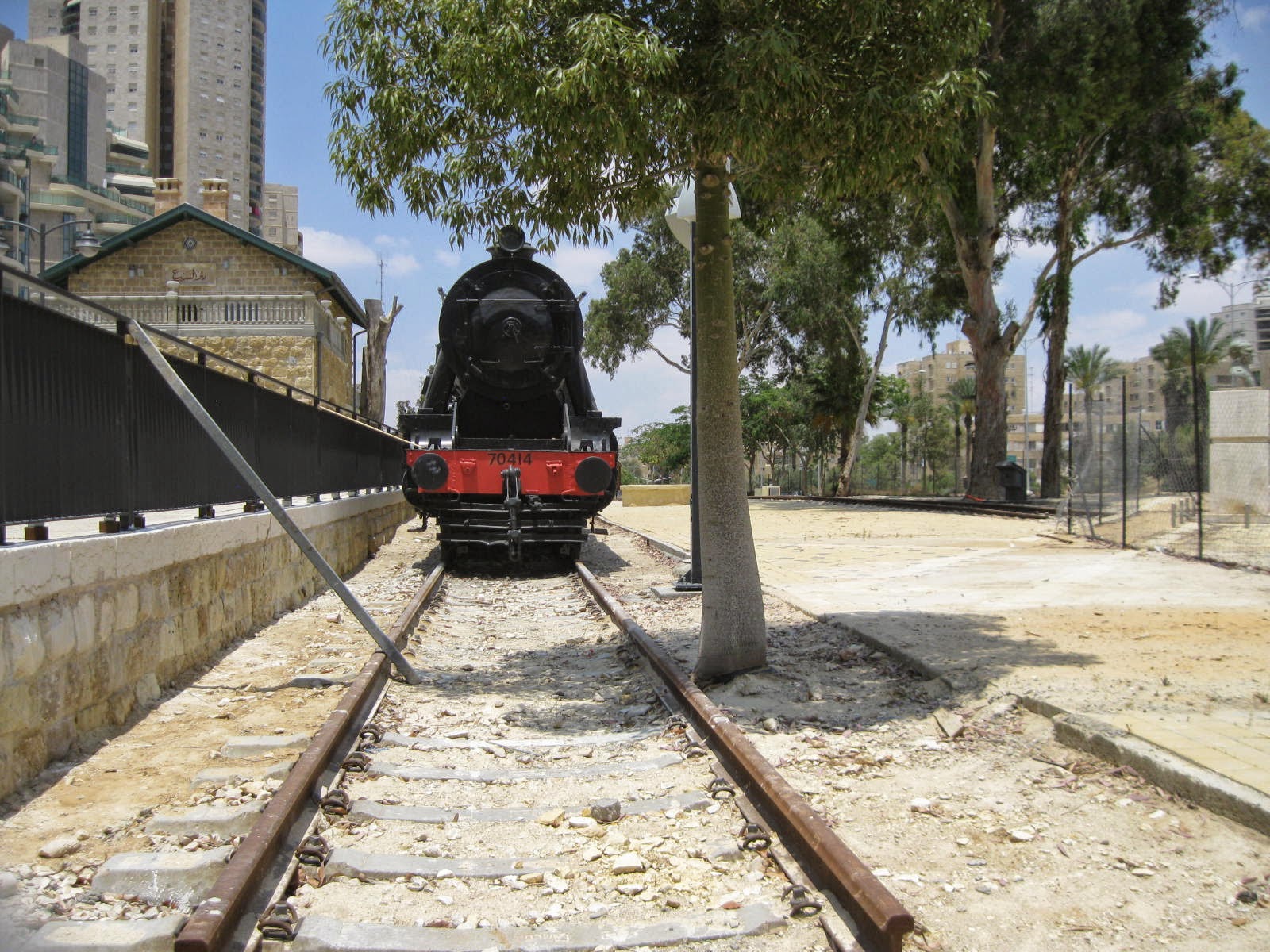
Here is the locomotive you've all been waiting for!
It has finally come to rest beside the 1915 Ottoman Turkish Beer Sheva train station.
Isn't it a beauty?!
Just outside the newly-restored but not yet officially opened train yard is Atatürk Plaza.
You can see the bust of Atatürk and the obelisk commemorating the 298 Turkish soldiers who were killed on the Beer Sheva front in World War I.
See more about this in my post about the annual Australian Light Horse Commemoration Day.
During Sukkot holiday the compound was open for just a few days.
Engine 70414 Compound guides were proud and excited to explain the history and also about the restoration work.
Site director Chen, in the photo, said their crew was stoked whenever a train-washing day came around, like after a muddy rain. (Well, she didn't use the work stoked but I think it is appropriate for a coal-burning steam engine.)
In the coming posts I will try to explain how and why this steam engine had a circuitous route, from England to Palestine, through the Suez Canal to Turkey, to Great Britain, and finally back to Beer Sheva.
It is a long story and involves a secret operation.
But meanwhile I'd like you simply to feast your eyes on 70414 and enjoy!
.
(Linking to Our World Tuesday.)
.
Showing posts with label Turks. Show all posts
Saturday, October 25, 2014
Friday, November 1, 2013
Australian Light Horse annual commemoration in Beer Sheva
.
Yesterday I found my way through the streets of Beer Sheva to the Park of the Australian Soldier.
My first time to see the annual commemoration and to see the new park, and both were very impressive.
The e-mail read "The Pratt Foundation and the Municipality of Be’er Sheva invite you to the commemoration of the 96th anniversary of the Battle of Be’er Sheva, marking the fall of the Ottoman controlled city of Be’er Sheva to ANZAC (Australian and New Zealand Army Corps) and British troops on 31 October 1917."
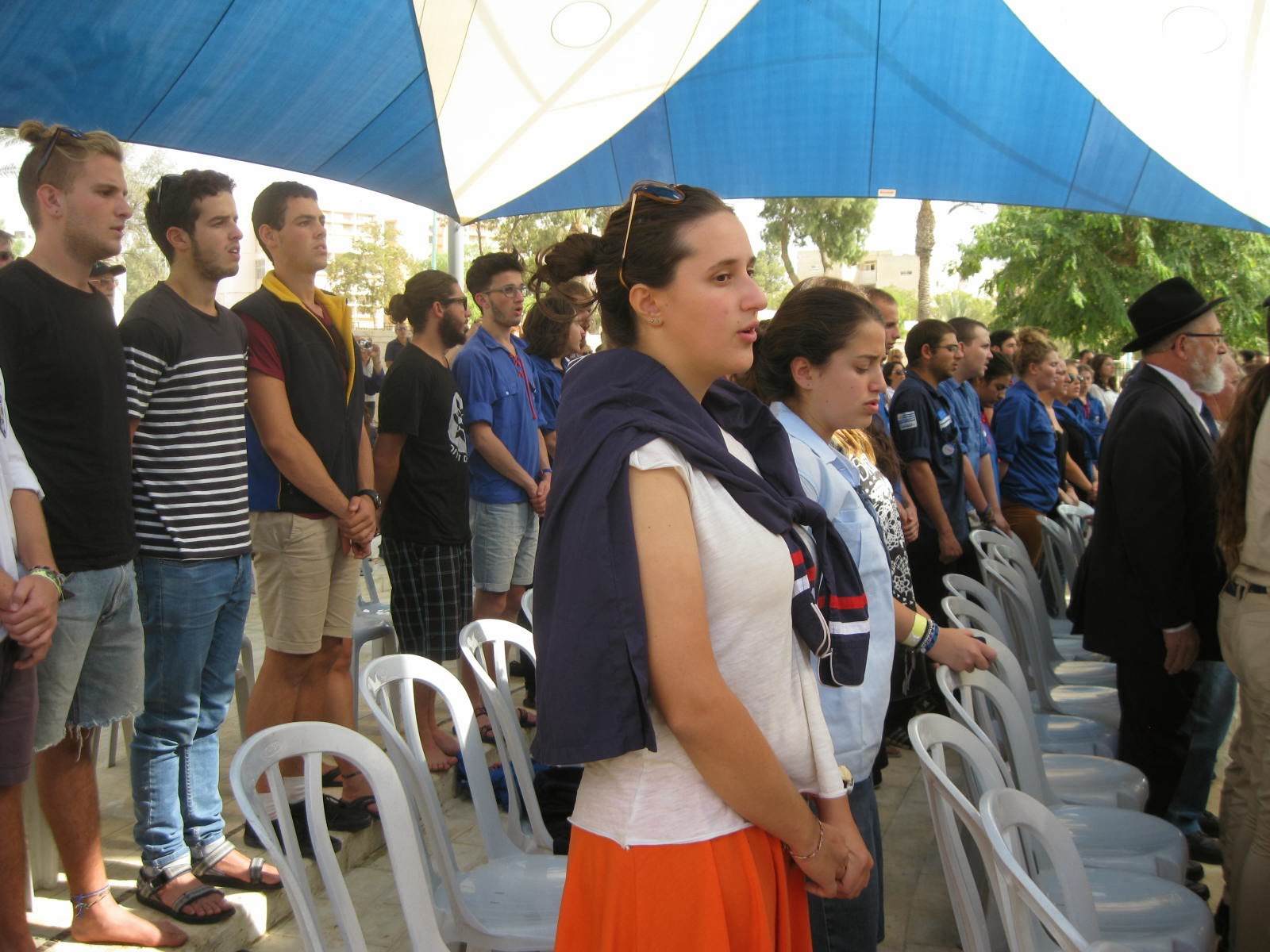
After morning tea the many guests took their seats and the ceremony opened with a long blast of a long and curling shofar.
The nice new Ambassador to Israel, H.E. Dave Sharma, gave a good speech about the great importance of the Battle of Beersheva.
BTW, he is Australia's youngest ambassador anywhere in the world.
Military representatives of Australia, New Zealand, Israel, and the United Nations were there.
Many Zionist youth movements attended, as did classes of high school students.
Dr. Apple, Rabbi Emeritus of Sydney's Great Synagogue, was expected to give a memorial prayer but he spoke instead about the recent attack on five Jews at Bondi beach.
The Australian youth groups joined in singing Advance Australia Fair and Hatikva.
Please enlarge the sign to read the story of the famous battle, history's last great cavalry charge.
The U.N. men from UNTSO and MFO were happy to pose for anyone with a camera.
Israelis are not used to seeing fancy dress uniforms and medals.
Everyone then went across town to the Beersheba War Cemetery.
The Commonwealth War Graves Commission says their cemetery contains 1,241 Commonwealth burials of the First World War, 67 of them unidentified.
In the Light Horse charge on Beersheva, 31 Australians were killed.
At least 70 horses were also killed in the audacious battle.
Again there was the laying of wreaths.
I asked for a poppy and the digger asked to put it by a soldier's grave.
I found a Jewish grave.
There are many more at the Jerusalem War Cemetery on Mt. Scopus.
The morning's ceremonies concluded a block away, at Atatürk Plaza, at the obelisk.
Carved in its stone:
The distinguished representative of Turkey spoke (in English) about the martyrs who died defending the then-Ottoman town of Beer Sheva.
He was proud to see the old Turkish train station behind him, part of the famous Hijaz Railway, being carefully restored as he spoke.
We stood for the Turkish and the Israeli national anthems.
Wreaths were placed at the foot of the tall obelisk, which was built in 2002.
With the strained Israel-Turkey relations in the last few years, it was very special to see the two flags flying side by side.
Let's hope Atatürk's motto, "Peace at home, peace in the world," will someday be true for all countries in the Middle East.
.
For more see Australian blogger-teacher Hels' post http://melbourneblogger.blogspot.com.au/2013/10/australian-and-new-zealand-light.html
.
Yesterday I found my way through the streets of Beer Sheva to the Park of the Australian Soldier.
My first time to see the annual commemoration and to see the new park, and both were very impressive.
The e-mail read "The Pratt Foundation and the Municipality of Be’er Sheva invite you to the commemoration of the 96th anniversary of the Battle of Be’er Sheva, marking the fall of the Ottoman controlled city of Be’er Sheva to ANZAC (Australian and New Zealand Army Corps) and British troops on 31 October 1917."
After morning tea the many guests took their seats and the ceremony opened with a long blast of a long and curling shofar.
The nice new Ambassador to Israel, H.E. Dave Sharma, gave a good speech about the great importance of the Battle of Beersheva.
BTW, he is Australia's youngest ambassador anywhere in the world.
Military representatives of Australia, New Zealand, Israel, and the United Nations were there.
Many Zionist youth movements attended, as did classes of high school students.
Dr. Apple, Rabbi Emeritus of Sydney's Great Synagogue, was expected to give a memorial prayer but he spoke instead about the recent attack on five Jews at Bondi beach.
The Australian youth groups joined in singing Advance Australia Fair and Hatikva.
Please enlarge the sign to read the story of the famous battle, history's last great cavalry charge.
The U.N. men from UNTSO and MFO were happy to pose for anyone with a camera.
Israelis are not used to seeing fancy dress uniforms and medals.
Everyone then went across town to the Beersheba War Cemetery.
The Commonwealth War Graves Commission says their cemetery contains 1,241 Commonwealth burials of the First World War, 67 of them unidentified.
In the Light Horse charge on Beersheva, 31 Australians were killed.
At least 70 horses were also killed in the audacious battle.
Again there was the laying of wreaths.
I asked for a poppy and the digger asked to put it by a soldier's grave.
I found a Jewish grave.
There are many more at the Jerusalem War Cemetery on Mt. Scopus.
The morning's ceremonies concluded a block away, at Atatürk Plaza, at the obelisk.
Carved in its stone:
1914-1918
THIS MONUMENT IS DEDICATED TO 298 HONOURABLE TURKISH ARMY SOLDIERS FALLEN AT THE BE'ER SHEVA FRONT FOR THE SAKE OF THEIR COUNTRYThe distinguished representative of Turkey spoke (in English) about the martyrs who died defending the then-Ottoman town of Beer Sheva.
He was proud to see the old Turkish train station behind him, part of the famous Hijaz Railway, being carefully restored as he spoke.
We stood for the Turkish and the Israeli national anthems.
Wreaths were placed at the foot of the tall obelisk, which was built in 2002.
With the strained Israel-Turkey relations in the last few years, it was very special to see the two flags flying side by side.
Let's hope Atatürk's motto, "Peace at home, peace in the world," will someday be true for all countries in the Middle East.
.
For more see Australian blogger-teacher Hels' post http://melbourneblogger.blogspot.com.au/2013/10/australian-and-new-zealand-light.html
.
Labels:
Australia,
Beer Sheva,
Beersheva War Cemetery,
cemetery,
memorial,
soldiers,
statue,
Turks,
war
Monday, October 12, 2009
The call to prayer, on video!
.
Turkey and Armenia have just signed historic accords aimed to end a century of hostility and mistrust between them.
I wish them luck. Today's post for That's My World Tuesday (Klaus' meme is one year old today!) is dedicated to the people living in the Armenian Quarter of Jerusalem's Old City.
If you remember an earlier post about the Armenian Orthodox St. James Cathedral, we said that many centuries ago the Ottoman Turks issued an edict forbidding the ringing of church bells in Jerusalem. As a legal loophole, a wooden board or an iron sheet called a simandron (or nakos, in Arabic) cleverly replaced bells to call the monks and the public to prayer.
Ottoman rule ended in 1917 and today Israel has freedom of religious expression. Many church bells ring in the Old City. But in memory of those centuries of Moslem prohibition of the bells, an Armenian monk emerges from the church every weekday and hammers on the simandron just before 3:00 pm vespers.
Try not to be distracted by the two women who cross the church courtyard on their way to buy candles to light during the service. Let's just say that it shows how well "hidden" I was beside a pillar while filming (which is forbidden).
What do you prefer? Did you enjoy the spirited hammering on the simandron, right next to you, or would you rather hear bells up in a tower?
(For more about Armenians in Jerusalem please click on my "Armenians" label below or in the margin.)
.
(Linking to inSPIREd Sunday.)
.
Turkey and Armenia have just signed historic accords aimed to end a century of hostility and mistrust between them.
I wish them luck. Today's post for That's My World Tuesday (Klaus' meme is one year old today!) is dedicated to the people living in the Armenian Quarter of Jerusalem's Old City.
If you remember an earlier post about the Armenian Orthodox St. James Cathedral, we said that many centuries ago the Ottoman Turks issued an edict forbidding the ringing of church bells in Jerusalem. As a legal loophole, a wooden board or an iron sheet called a simandron (or nakos, in Arabic) cleverly replaced bells to call the monks and the public to prayer.
Ottoman rule ended in 1917 and today Israel has freedom of religious expression. Many church bells ring in the Old City. But in memory of those centuries of Moslem prohibition of the bells, an Armenian monk emerges from the church every weekday and hammers on the simandron just before 3:00 pm vespers.
Try not to be distracted by the two women who cross the church courtyard on their way to buy candles to light during the service. Let's just say that it shows how well "hidden" I was beside a pillar while filming (which is forbidden).
What do you prefer? Did you enjoy the spirited hammering on the simandron, right next to you, or would you rather hear bells up in a tower?
(For more about Armenians in Jerusalem please click on my "Armenians" label below or in the margin.)
.
(Linking to inSPIREd Sunday.)
.
Subscribe to:
Posts (Atom)