Showing posts with label Torah. Show all posts

Saturday, September 1, 2018

Teach

.

Torah was given to teach us. 

And today's City Daily Photo Theme Day's focus is TEACH.


Pirkei Avot 4:15 in the Talmud says


Rabbi Elazar ben Shamua taught: "The dignity of your students should be as precious to you as your own. The dignity of your colleagues should be as precious to you as your reverence for your teacher. The reverence for your teacher should be as great as your reverence for God."
And the daily prayer Kaddish dRabbanan blesses our teachers:


 "May you be blessed and strengthened 
as you have blessed and strengthened your student.
May you have peace, grace, kindness, mercy, long life and
everything you need."
Good luck to the 2,310,000 pupils in Israel who start the new school year tomorrow, Sunday, Sept. 2.  
And blessings to their teachers!
.

Saturday, July 5, 2014

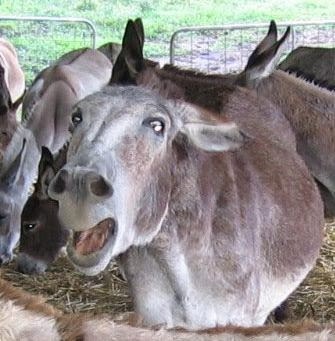
Balaam and his talking ass

.

Today is Shabbat Balak. 
This means the Torah portion for the week is Parashat Balak, which is roughly Numbers 22-24, one of my favorite Bible stories.
Balak, the king of Moab, hires Balaam, a non-Jewish prophet, to curse the Israelites.

 Balaam gets on his donkey and rides off to curse the People. 
But three times the she-ass tries to avoid a confrontation with an angel, who is holding a drawn sword and blocking their way. 
The man's eyes have not yet been opened and he is angered by his donkey's erratic behavior.

"When the donkey saw the angel of the Lord, she lay down [refusing to budge] for Balaam. Balaam's anger was kindled and he struck the ass with his staff." (Numbers 22:27)

 "THEN THE LORD OPENED THE MOUTH OF THE ASS  and she said to Balaam, 'What have I done to you that you beat me these three times?'
 'You have been playing games with me!' shouted Balaam at the donkey.  'If I had had a sword in my hand just now, I would have killed you!' 
The donkey replied to Balaam, 'Am I not your ass, upon which you have ridden all your life long to this day? Was I ever accustomed to do so to you?' 
And he said, 'No.' "

"Then God opened the eyes of Balaam, and he saw the angel of the Lord standing in the way ...  and he kneeled and prostrated himself on his face."

Finally Balaam reaches his destination and opens his mouth to curse, but blessings come out instead. 
In fact, the words of Balaam are to this day sung  in our daily morning prayers:
 "Ma tovu--how good are your tents, Jacob, your tabernacles,  O Israel."


Balaam and His Ass,  1622
Pieter Lastman, Dutch, 1583-1633
Oil on panel
At the Israel Museum, Jerusalem


(Linking to Camera Critters meme.)
.

Tuesday, June 10, 2014

Yemenite synagogue

.
So during Heritage Preservation Week we got a free guided tour of three older synagogues, all in the Alef neighborhood of Beer Sheva.
In the whole city there are over 200 synagogues.


Welcome to the Abba Shalom Shabazi Yemenite Synagogue.


 Women sit in the upper balcony and can look down on the men below.
The pews are along the sides, and the reading desk for the Torah scroll is in the center.


The scroll is kept in a  hard case, a tik,  Sephardic-style, in contrast to the Ashkenazi custom of covering the scroll with a soft mantle, a me'il.


This Yemenite congregation has many beautiful Torahs,


all kept in the aron kodesh, the holy ark.
.
Jews lived in Yemen ever since the destruction of the Second Temple in 70 CE.
 Between June 1949 and September 1950, the overwhelming majority of Yemen's Jewish population was transported to Israel in Operation Magic Carpet.
So many of the new immigrants were directed to Beer Sheva that they needed to build two Yemenite synagogues in the city.
.
More about Yemenite Jews in Wikipedia.
UPDATE! -- In a secret mission at the end of March 2016 some of the last Jews who remained in Yemen  were brought to Israel!  Read the story here.
Only about fifty Jews still want to live in Yemen.

(Linking to inSPIREd Sunday.)

Wednesday, June 4, 2014

Walking through the Ten Commandments

.
Today is the happy holiday of Shavuot, also called the Festival of Weeks, Pentecost, the holiday of the First Fruits and of the reaping of grain.
Shavuot also became known as the day on which God gave the Torah on Mt. Sinai.
It is a mitsvah for every Jew to stand and hear the Ten Commandments read in the synagogue today. 


During the recent Heritage Preservation Week, the head man of  Struma Synagogue in Beer Sheva showed our tour group the Torah scrolls in their holy ark.

And with a big smile he explained that when they were building the synagogue the 1950s movie "The Ten Commandments" with Charlton Heston was popular, and he was inspired by it to design the back wall and door as the two tablets!


You are welcome to see my other posts about Ruth and Naomi and about cheese and cheesemakers, which are also part of the Shavuot tradition.
See more about the Struma synagogue at my other post.
.
(Linking to inSPIREd Sunday  and   Whimsical Windows, Delirious Doors.)
.

Sunday, October 27, 2013

Honoring the Torah, the elder, and the females

.
Here is more from our visit to the Cochin Jewish Heritage Center in Nevatim.
(Please see my last few posts for more about the Jews of India.)


"Torah case adorned with chains (tali or niyali) and Torah crown.
Parur and Ernakulam,
late 19th - early 20th century.
Case: wood covered with silver sheet.
Crown and chain: silver repousse."


"In honor of [the Simchat Torah holiday], a manara (elevated platform covered with a canopy and decorated with Torah ark curtains) is erected in the synagogue, upon which the Torah scrolls are placed."

 (Quotations are copied from the museum's signage.)


"The common practice of the community was to circle around the Torah ark seven times. . . .
The circling around was attended by songs from the Kolas, the songbook of the Cochin Jews, and by dancing before the Torah.
. . . The women participated more actively in this holiday than in others and even came downstairs to kiss the Torah.  The girls, moreover, were permitted to join in the Shevah Hakefot [the circling] alongside the boys.
. . .
At the conclusion of the day, all members of the community escorted the eldest member to his home, whereupon they received his blessing and then continued in the dancing and celebration."
.
Miri, our wonderful guide at the Heritage Center, said they still do all these in Nevatim, their moshav in the Negev where the museum is located.
.

Thursday, October 24, 2013

Moving up

.
In the previous posts we've been talking about the synagogue of Nevatim in the Negev,
the one built by the resident Jews,  who originally immigrated from Cochin, India.


Now come up the stairs to the women's section of the synagogue.
What surprised me to hear from Miri, our guide, was that in their Cochin tradition,  women have long been taught to read Torah!


So the Torah scroll in taken from the holy ark on the main floor and brought up to the upper gallery to this table  where the Torah portion of the day is chanted for all to hear--both the women in the balcony and the men below ("out of the depths I cried to You . . . ").


I am not saying that women chant the Torah on Shabbat (our guide did not say that), but with their learning it is natural for them to want to be close to the scroll.


The vertical blinds of the mechitsa screen  look quite see-through and easy to open, if the women are so inclined.  


Our tour group from Meitar learned a lot of good things at Nevatim, both in their synagogue and at their Cochin Jewish Heritage Center.
.
UPDATE: The Times of Israel just now published this article about a new historical novel about the Baghdadi Jews of Kolkata  (Kolkata/Calcutta  being on the opposite side of the Indian sub-continent from Cochin).
.

Wednesday, May 15, 2013

A good Shavuot lesson for modern-day Israel

.
Chag sameach!
Today is the Jewish holiday of Shavuot.
The Feast of Weeks is also called the Time of the Giving of the Torah, the Festival of the First Fruits, and the [wheat] Harvest Festival. 
Shavuot commemorates the people's pilgrimage to Jerusalem to bring first crops to the Temple. 
 
Today the Ten Commandments were  read in synagogues and also the Book of Ruth, telling the story of Ruth the Moabitess who followed Naomi and became Jewish.
 On Shavuot it is the tradition to eat dairy foods, wear white, and study Torah throughout the night.

More posts about it under my labels "Shavuot"  and "Torah."


I learned something nice today, thanks to the Velveteen Rabbi.

Exodus 19:1-2 states that
1 In the third month after the children of Israel were gone forth out of the land of Egypt, the same day came they into the wilderness of Sinai. 
2 And when they were departed from Rephidim, and were come to the wilderness of Sinai, they encamped in the wilderness; and there Israel encamped before the mount. 
That last part, in Hebrew,  is  וַיִּחַן-שָׁם יִשְׂרָאֵל, נֶגֶד הָהָר
Suddenly the Torah is using a singular verb to say that we (plural) camped in front of the mountain.
Why?

 Rashi understands it to mean that the Israelites camped there as a single entity, with one heart and one purpose.

Or as Velveteen Rabbi says in her blog, "On this day, long long ago, despite all of our frustrations and our differences, we were together at the mountain as one. We were one people, one heart, one community. And in that state of oneness, we entered into relationship with God. In that state of oneness, we received revelation. We experienced divinity. We experienced the theophany . . . "

And the following verse says, "And Moshe ascended to Heaven and God called to him from the mountain. . . ."
 The 15th century Italian commentator Rabbi Sforno explains that  "This teaches us that Yisrael set themselves to the task of preparing the camp, and Moshe ascended to prepare himself for his approaching prophecy."

As I find at a "Chassidus" website

"Rabbi Chayim Shmuelevitz, the former Rosh Yeshiva of the famous Mir Yeshiva of Poland and then later Jerusalem, once pointed out the seemingly contrary intent of the comments of the Sforno:

 How is it possible to describe the activities of Moshe and the people in one breath?! Moshe Rabbenu is preparing for the world's greatest revelation, and the people are digging latrines and pounding in tent pegs?

 He answers that when they pitched camp, each one was concerned not with his own place, rather he took the time to worry about his neighbor; was his camp in order, did he need some help.
Because they were doing chesed [~ acts of kindness] one with the other, they showed that they were indeed a nation that was fit to receive the Torah.
Moshe's going up was made possible by the Nation's pitching camp."
.

Monday, October 8, 2012

Bells on the Torah

.
Today is Simchat Torah, the rejoicing with the Torah scrolls, carrying them around the synagogue with dancing and singing.
 The annual Torah reading cycle is completed and begun anew.
 The end of the fifth book of Moses is read, the scroll is rewound, and the first part of Genesis is chanted.


The closest I have gotten to a Torah scroll this year is in museums. 
The Israel Museum has these beautiful finials (the ornaments placed on top of the wooden handles of the scroll).
Please click a few times on the photo to see the little bells up close.


Here  above you can read the whole story, courtesy of the museum.

Particularly interesting is this part:
The majesty, glamor, and renown  of the great Portuguese Synagogue of Amsterdam--the Esnoga--reflected the aura of wealth that enveloped the distinguished members of the community.
The same is true of the Portuguese community's splendid Torah ornaments, which were manufactured by eminent Dutch*  silversmiths.  . . .
Adorned with many bells, the tower-shaped finials were clearly inspired by the steeples of Dutch churches.
At times one can even identify the exact tower that served as a model.

*i.e. Christian artisans, so I take it
.

For more on the subject please follow my labels: Torah,  Simchat Torah.
.

Friday, August 10, 2012

Celebration for a kids' Torah

.
Never have I seen chairs set up at the Western Wall Plaza.
But on Wednesday there were THOUSANDS of them!
Little plastic "handcuffs" tied the chairs together and ensured orderly rows.

The sign at the stage revealed the reason: in a few hours the writing of a children's Torah scroll would be completed and dedicated, all with much joy and fanfare.

Apparently Chabad has a program in which a child, or an infant's parents, can pay one dollar and have one letter of a Torah written for him or her.

I learn in this article about Wednesday's event that
Three decades ago on his birthday, the Rebbe spoke of the special power children have to make the world a better place. All over the globe, their “very breath free of sin,” could fuel a dramatic demonstration of unity that could change the planet. In order to accomplish this, he urged that every Jewish child possess a letter in a Torah scroll written specifically for them. All it would cost is the symbolic amount of one dollar, ideally coming from the child’s own funds or sponsored by parents and family members. Each letter would link Jewish children the world over to the foundation of their heritage.
To read all about it, please see http://www.kidstorah.org/.

Shabbat shalom.
.

Tuesday, May 8, 2012

Quill and Qulmus

.
For ABC Wednesday I found not one but two words beginnings with Q:
quill and the Hebrew word qulmus, which means quill.

This nice little video at the Israel Museum showed how a sofer stam , a scribe for holy writing, cuts a turkey or goose feather in a special way, turning it into a quill.
He then dips the qulmus in specially prepared black ink and "hangs" the Hebrew letters from the sirtut lines he has etched into the parchment. (Look closely and see his guide-lines in the photo.)

See more about this process at Wiki and Torah Tots.

Even more ancient than the feather quill is the reed quill.
Our Talmudic sages taught that to write a Torah scroll one must not use a quill from a cedar tree that stands tall and arrogant, rather a quill from a reed, which is soft, flexible, and humble.

The Hebrew word qulmus (also transliterated kulmus) come from the ancient Greek kalamos (and Latin calamus), meaning reed or reed pen.

The basis for this meaning is the story of the Greek mythological figure Kalamos, son of Maiandros (god of the Maeander river).
Two youths, Kalamos and Karpos, were competing in a swimming contest in this river when Karpos drowned.
In his grief, Kalamos allowed himself to drown also.
He was then transformed into a water reed whose rustling in the wind was interpreted as a sigh of lamentation.
.
On a happier note, have fun listening to Hora Ha-Kulmus, Dance of the Quill, for reed instruments!
.
UPDATE  See Bibi Netanyahu pen a word of Torah in the scroll-writing project in the synagogue atop Masada! 

Friday, April 27, 2012

Reflections of life in a Torah scroll

.

Jerusalem and a Jewish family reflected in a rolled-open Torah scroll.
(And the Torah is reflected in the life of this family and of Jerusalem, too. )

The open scroll is in the Israel Museum's wing for Jewish Art and Life.

Yesterday, for Independence Day, the museum graciously opened its doors for free.
AND, not one of the guards in the galleries yelled at me for taking pictures! Yay!

Their next free admission day will be May 10, International Museum Day.
.
More reflections from around the world at Weekend Reflections meme.
.
Shabbat shalom!
.

Monday, December 12, 2011

Doors of the Torah ark

.
For Monday Doorways let's focus on the doors of the Torah ark in the synagogue.

After two scrolls were taken out of the aron kodesh (the "holy ark"), the parochet (curtain) was again closed.
Enlarge the top picture and you can see the bar mitsvah boy holding a silver yad (pointer) and chanting his Torah portion.

At the end of the readings, the wooden cases of the scrolls are closed.
The parochet is drawn to the side, then the wooden holy ark doors are opened.

The scrolls are carefully put inside the ark while prayers are sung.
Then the doors and the curtain are closed.
.
Mazal tov to my young neighbor, the bar mitsvah boy!
He did well and made us proud.
.
.
This indoor tour can be for Our World Tuesday too.

Lots more posts about the Torah here.
.

Wednesday, June 22, 2011

A rare mitzvah, with great festivity

.
My village had a simcha, a joyous event, a few weeks ago.
See? It even says so on the van:
simcha -- joy, emuna -- faith, osher -- happiness
.
The van drove slowly through the moshav, its loudspeakers blasting ecstatic religious songs, and parked at my neighbor's.
.
A new Torah scroll was going to be dedicated!
My neighbor had paid (a lot!) to have it made and to have a scribe write it.
.
Many gathered on their patio for refreshments.
The men entered the house for afternoon prayers and to see the final letters of the Torah penned.
.
Then the sefer Torah was brought out under a canopy (like in a wedding) and there was dancing and singing in the street!

The procession began, headed by the lights and music of another van.
.
The source of this custom is the Biblical book II Samuel 6:12-15:
"And David went and brought up the ark of God … into the City of David with joy.... And David danced with all his might before God.... And David and all the House of Israel brought up the ark of God with shouts and with the sound of the shofar [ram's horn]."

You can see Jerusalem on the hill, on the top left of the photo.
.
We snaked through the streets of the village (population about 80 families).
More and more people came out to join in the festivities.
Many men were given the honor of carrying the Torah, which was decorated with scarves.
Women threw candies on the crowd, to the delight of the children.

The parade stopped near the synagogue.
All the scrolls came out from the synagogue to welcome the new Torah.

There must have been almost a dozen.
.
A Chabad page says that
"As the procession approaches the synagogue, the chazzan (cantor) approachs the Holy Ark and proclaims:

'Torah scrolls, on behalf of the holy congregation that prays in this synagogue, you are requested to come and greet the Torah that ____ son/daughter of ____ has merited to write and dedicate at an auspicious hour to this synagogue.' "

.

Then everyone stood still and the appropriate prayers were said.

The scrolls returned to the Ark and made room for their new neighbor.
.
The men prayed the evening service.
.
Like other mitzvah events, the dedication of a Torah is followed by a mitzvah meal.
.
Our seudat mitzvah took place at the moshav's community hall, Beit HaAm.
I tasted kubbeh soup, a rich broth with meat-stuffed dumplings and vegetables, for the first time.
.
It was one of those nights when you feel really happy to be Jewish and to be living in a friendly little moshav in the Jerusalem Hills.
.
.
Sunday, March 20, 2011

Lying lips

.
To answer Robert's Sunday Psalm Challenge at Daily Athens, here is PSALM 12.
.
1. For the leader; on the sheminith. A Psalm. Of David.

2. Save, O LORD! For the faithful are no more; the loyal have vanished from among humankind.

3. Men speak lies to one another; of smooth lip, they speak with two hearts.


4. May the LORD cut off all smooth lips,
.

the tongue that speaks boastfully,
5. those who say, “By our tongues we shall prevail; our lips are our own, who can be our master?”
.
6. ‘‘Because of the plundering of the poor and the groans of the needy, I will now arise,” says the LORD; “I will grant him the salvation for which he longs.”
.
7. The sayings of the LORD are pure sayings, silver purged in an earthen crucible, refined sevenfold.
.
8. You, O LORD, do keep them; ever protect each from this generation.
9. Round about the wicked roam, as vileness is exalted among humankind.
.
_____________________________________________________
Photos:
"The Golem," popularly known as The Monster, by Niki de Saint Phalle. More about it here.
.
A homeless sitting by the [British] Jerusalem War Cemetery.
.
Fine silver cases, crowns, and breast plates for Torah scrolls in a Judaica store.
.

Thursday, September 30, 2010

A Torah's wanderings

.
For the Simchat Torah holiday today, when we dance and sing with the Torah scrolls and rewind them back to Genesis 1, here is a very old scroll with a dramatic history.
.
The deerskin on which it is written is unusually dark. Normally a Torah is a light tan color.

The Jewish museum at Hechal Shlomo in Jerusalem, where it is now housed, tells this story:

This Torah scroll was written in Spanish script, probably before 1492, by an excellent scribe on deerskin.
It wandered to Germany. There the Jewish congregation of Krautheim repaired it and added a piece of parchment with the missing chapter, written in Ashkenazic script.
The scroll survived a flood, the Gestapo, and bombings of the house in whose attic is was hidden during World War II.
.
The middle photo on the right shows the old Jewish hospital in Karlsruhe where it was hidden.

If you enlarge this photo you can see where the two pieces were stitched together.
.
.
This post is especially for my good friend Angelika, a teacher in Karlsruhe.
.

Tuesday, May 18, 2010

Revelation and response

.
Happy Shavuot! The holiday begins tonight.
And so does ABC Wednesday R Day.

One name of the Shavuot holiday is The Time of the Giving of Our Torah.
Moshe Rabbenu, Moses our Teacher, received the revelation from God on Mt. Sinai.
.
"Boaz and Ruth" by William Hole, 1607-1624, British
.
In the synagogue the Book of Ruth is read.
Converts like Ruth the Moabite, who followed Naomi, are appreciated especially on this day.
Ruth was gleaning in the field when she met Boaz. They married and became ancestors of King David.
.
Shavuot is indeed The Festival of the Harvest.
Last week, from the bus window, going up north to the Galilee, I could see that the grain had just been cut.
.
Pilgrimage section at the Tower of David Museum
.
It is also the Festival of the First Fruits.
Specific agricultural offerings were brought to the Temple on Shavuot, which is one of the Slosh Regalim, the three pilgrimage festivals when Jews went up to Jerusalem.


Not part of the ritual, but really important as a custom, is to eat cheese and dairy food on Shavuot.
.
Then there is Tikkun Lel Shavuot, the all-night study session of Torah.
And wearing white.
And decorating the house with greenery.
.
Every year on this holiday we renew our acceptance of God's gift and God "re-gives" the Torah!
.