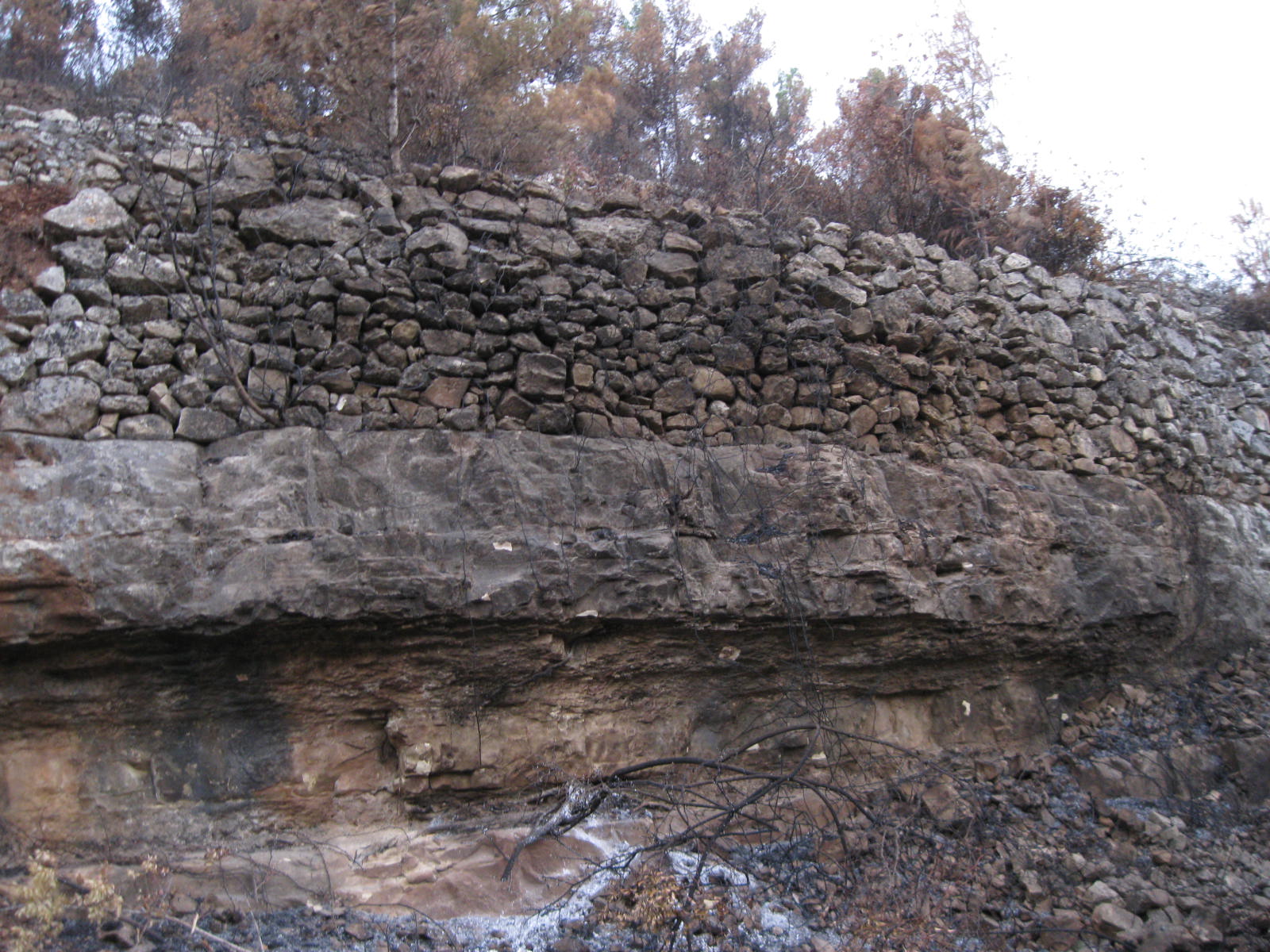
 I walked down to the valley this afternoon to see how winter is changing the charred landscape.
In July 2010 a fire burned the forest on the hills west of my village (shown here and here).
In June 2011 the Keren Kayemet foresters started sawing down the dead trees and putting in firebreaks.
Recently they must have gotten down to the more cosmetic touches, like sawing the two small trees that you see in the photo above.
The problem is, those trees had been growing out of the ancient terrace wall.
 Their removal left a big hole.
I left the photo nice and big so you can click on it and enjoy the beautiful stones in detail.
With nothing to support them, that row of stones is not long for this world, I fear.
And once there is one breach in the wall, more will follow.
I love Isaiah's prophecy in Isaiah 58:12:
You will rebuild the ancient ruins, raise foundations from ages past, and be called "Repairer of the breach [or: of broken walls], Restorer of streets to live in."
 Jerusalem is surrounded by hills and the only way to raise crops was to build agricultural terraces.
Farmers picked rocks from the ground and built the terrace walls; they may have had to bring in soil for each little plot.
They devised irrigation channels from the many springs in the Jerusalem Hills.
In the bottom of the valleys they built dams, as pictured above.
When rain water rushed down the valley from the hills, these dams stopped the soil from being washed away.
.
In Biblical days, farmers were able to feed their families from these terraces and also most of the great throngs of pilgrims who ascended to the Temple in Jerusalem on the pilgrimage festivals.
In recent centuries, up to 1948, Arab farmers grew many fruit trees and I'm not sure what else in the hills.
I admire all who did this hard work in a not easy land.
.